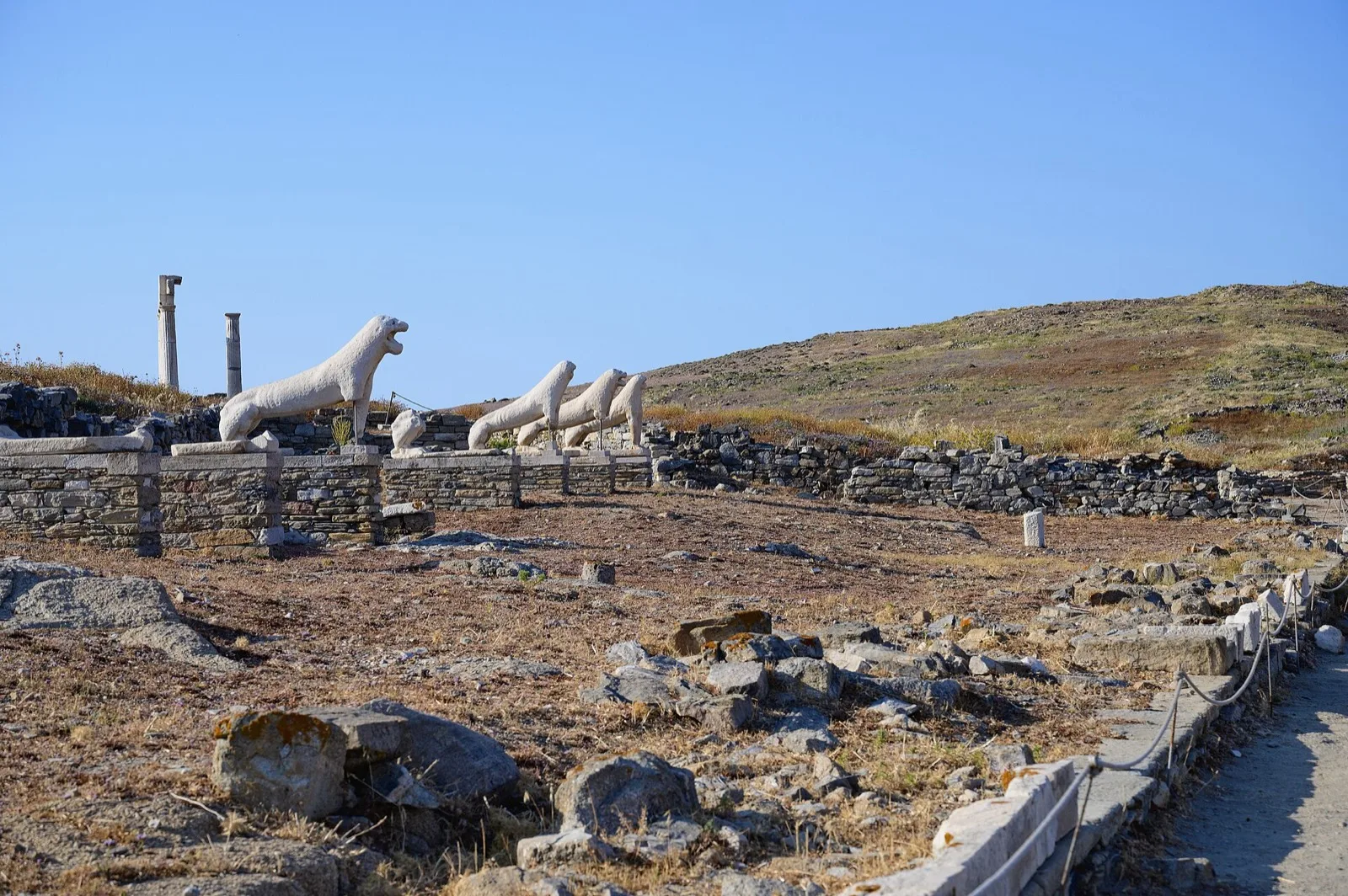
Terrace of the Lions
Marble lions offered by the Naxians around the 7th century BC; the originals are in the site museum.
ديلوس ورينيا وقرية من العصر الحجري الحديث في فتيليا — ما الذي بقي، وأين توجد المكتشفات.
Mykonos is better known for beaches than for ruins, but its history runs deep: a Neolithic village at Ftelia, the sacred island of Delos across the strait, and Rhenia, where the dead of Delos were reburied. The best finds are split between the museums of Delos and Chora. Here is what survives and how to see it.
The headline: a UNESCO-listed sanctuary and Hellenistic city, 30–40 minutes by boat.
A Late Neolithic settlement on the north coast, dated to about 5000–4500 BC.
Finds from Rhenia and Mykonos, including a 7th-century BC pithos with the Trojan Horse.
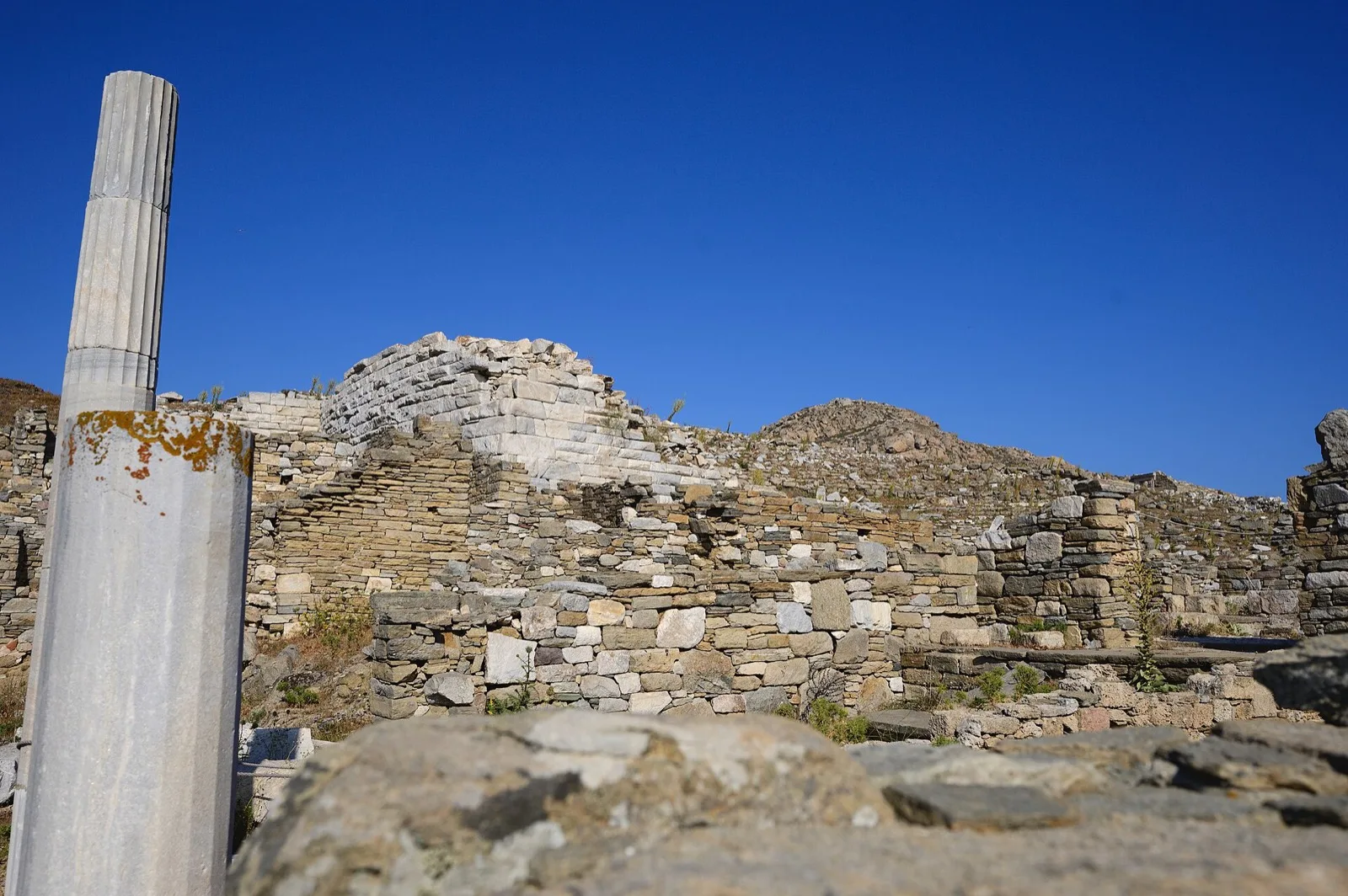
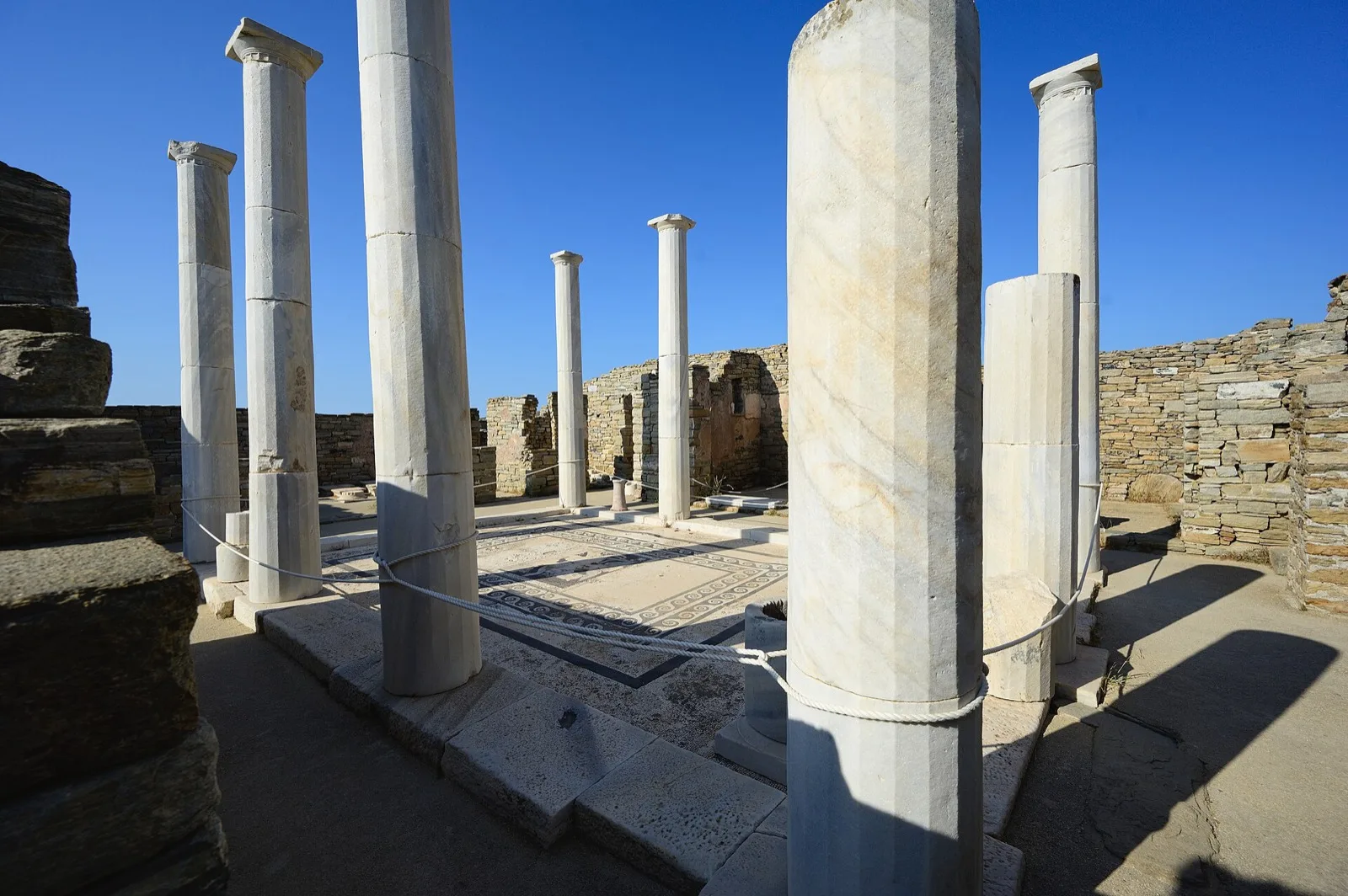
Delos was the religious centre of the Cyclades for a thousand years and, after 166 BC, a booming free port. Its streets of merchants' houses, mosaics, theatres and temples are among the most complete ancient townscapes in Greece. Sacked in 88 BC and again in 69 BC, the city emptied and was never rebuilt — which is why so much survived.
Marble lions offered by the Naxians around the 7th century BC; the originals are in the site museum.

Floors of the merchants' houses: Dionysus on a panther, dolphins and theatre masks.

Where Leto was said to have given birth to Apollo; drained in the 1920s and marked by a low wall.

In 426 BC the Athenians "purified" Delos: no one was allowed to be born or to die on the sacred island, and the old graves were dug up and their contents moved to a pit on neighbouring Rhenia. The finds from that purification pit form the core of the Archaeological Museum of Mykonos in Chora.
Today Rhenia is uninhabited, with no facilities. Visitors come by excursion boat or private charter, mostly to swim in its clear coves; the scattered ancient remains are not organised for visits.

On a low hill by Ftelia bay, excavations from 1995 to 2003 uncovered a Late Neolithic village dated by radiocarbon to about 5000–4500 BC. Archaeologists found house foundations from four phases, pottery, stone tools, early traces of metalworking and 19 stone figurines of people and animals (Ephorate of Antiquities of Cyclades).

Finds from Rhenia's purification pit, prehistoric Ftelia and Mykonos, with the famous pithos showing the Trojan Horse. Summer hours 09:00–16:00 (Ephorate of Antiquities of Cyclades, 2026).
€5 · closed Tuesday
The original lions, sculpture from the sanctuaries, wall paintings and objects from daily life — included in the €20 ticket.
With the site ticketThe main site is Delos, a UNESCO-listed sanctuary 30–40 minutes by boat from Chora. On Mykonos itself, the Neolithic settlement at Ftelia dates to about 5000–4500 BC. Rhenia, next to Delos, held the graves moved from the sacred island in 426 BC; its finds are in Chora's Archaeological Museum.
Yes — it is one of the most important archaeological sites in Greece and the best half-day trip from Mykonos. Expect temples, a theatre, marble lions and superb mosaics. The site ticket is €20 (reduced €10), the boat is extra, and three to four hours ashore is enough for most visitors.
Delos is an archaeological site protected as a whole, so only guards and archaeological staff stay there, and visitors must leave before closing. The rule echoes antiquity: after the purification of 426 BC, no one was allowed to be born or die on the sacred island.